
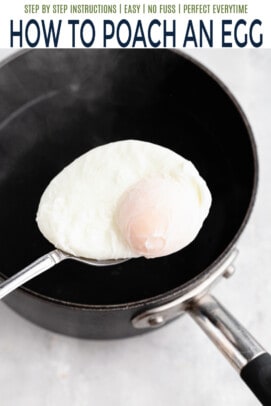
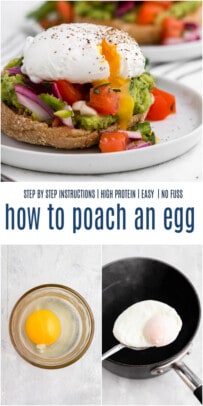
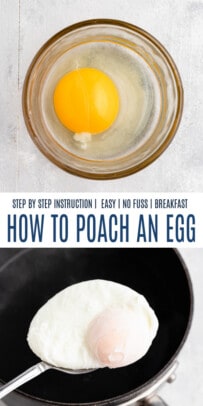
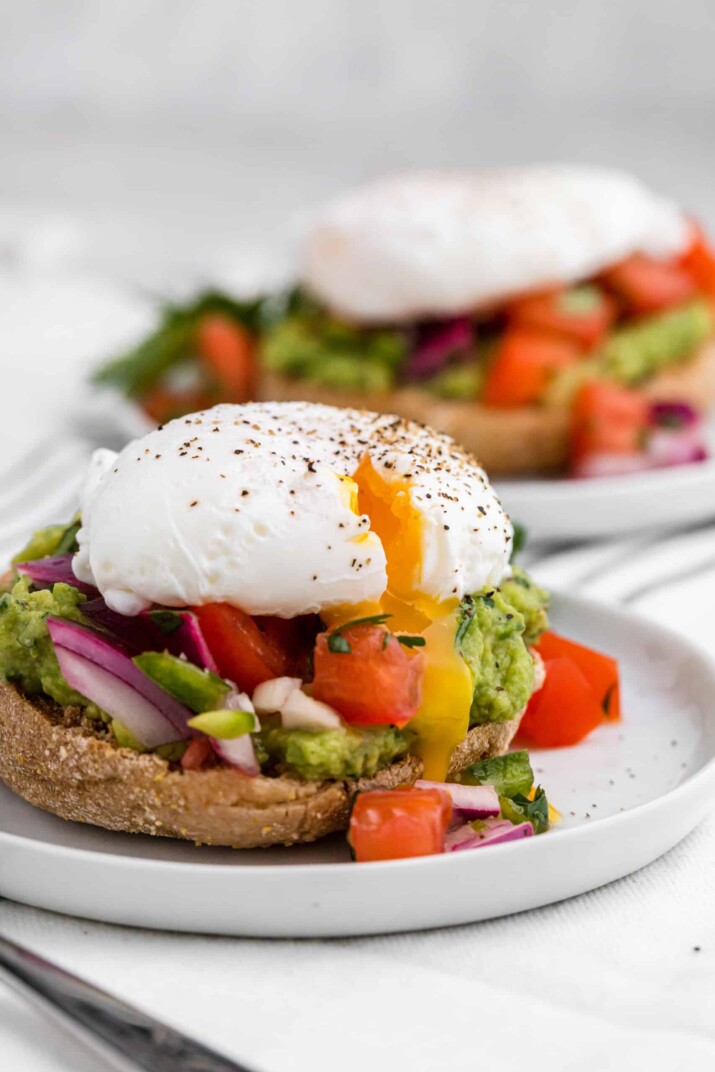
Learn how to make flawless poached eggs on the stovetop with this easy tutorial! I’m talking soft poached eggs with runny, gooey yolks that ooze out when you pop into the soft white exteriors. So delicious!
Breakfast is one of my favorite meals, especially on the weekend. These eggs are a great topper for sweet potato hash served along side my iced chai tea latte.
I must admit: I had actually never poached an egg until about a month ago after I tried Eggs Benedict for the first time in Hawaii. I know, unthinkable, right!? As soon as I cut into that jewel of an egg on top, I knew I had to learn how to make poached eggs at home.
Once I perfected the process, the rest was history. I’ve been serving jammy eggs on my avocado toast at least twice a week ever since! This is definitely my new favorite method for cooking eggs, though I’ll always love them hard-boiled in an egg salad.
It took me a few failed attempts to get it just right, so don’t get discouraged if you don’t master the technique right away. If you follow these instructions, you’ll be churning out perfect poached eggs like a well-oiled machine in no time! And I have some helpful tips and tricks to give you a head start.
Why I Love Cooking Poached Eggs
- It’s quick. Poached eggs are ready in minutes.
- Easy to clean. Since they cook in water, clean up is quick and easy without any serious scrubbing afterward.
- Cooked how you like them. Use this method to cook soft or medium poached eggs. (I’m partial to gooey, soft-poached myself!)
- Endless breakfasts. Once you’ve learned how to poach eggs, use them to make homemade Eggs Benedict, or add them to hash recipes, toast, and more.
What You’ll Need
See the recipe card for the exact amounts.
- Egg: We’ll start with the obvious, the egg in question. Use the freshest eggs possible when making poached eggs. The whites will be much less stringy.
- Water: The amount will vary depending on your saucepan. You generally want enough water to fill the pan 1/4 of the way full, enough to submerge the egg.
- White Vinegar: White vinegar helps the egg whites gel and hold together in the simmering water. Keep in mind that substituting with another kind of vinegar will affect the flavor of the egg.
How to Poach an Egg Like a Pro
This method hasn’t failed me since I got the hang of it! Here’s the best way to prepare a perfect, 4-minute poached egg with soft, runny yolks.
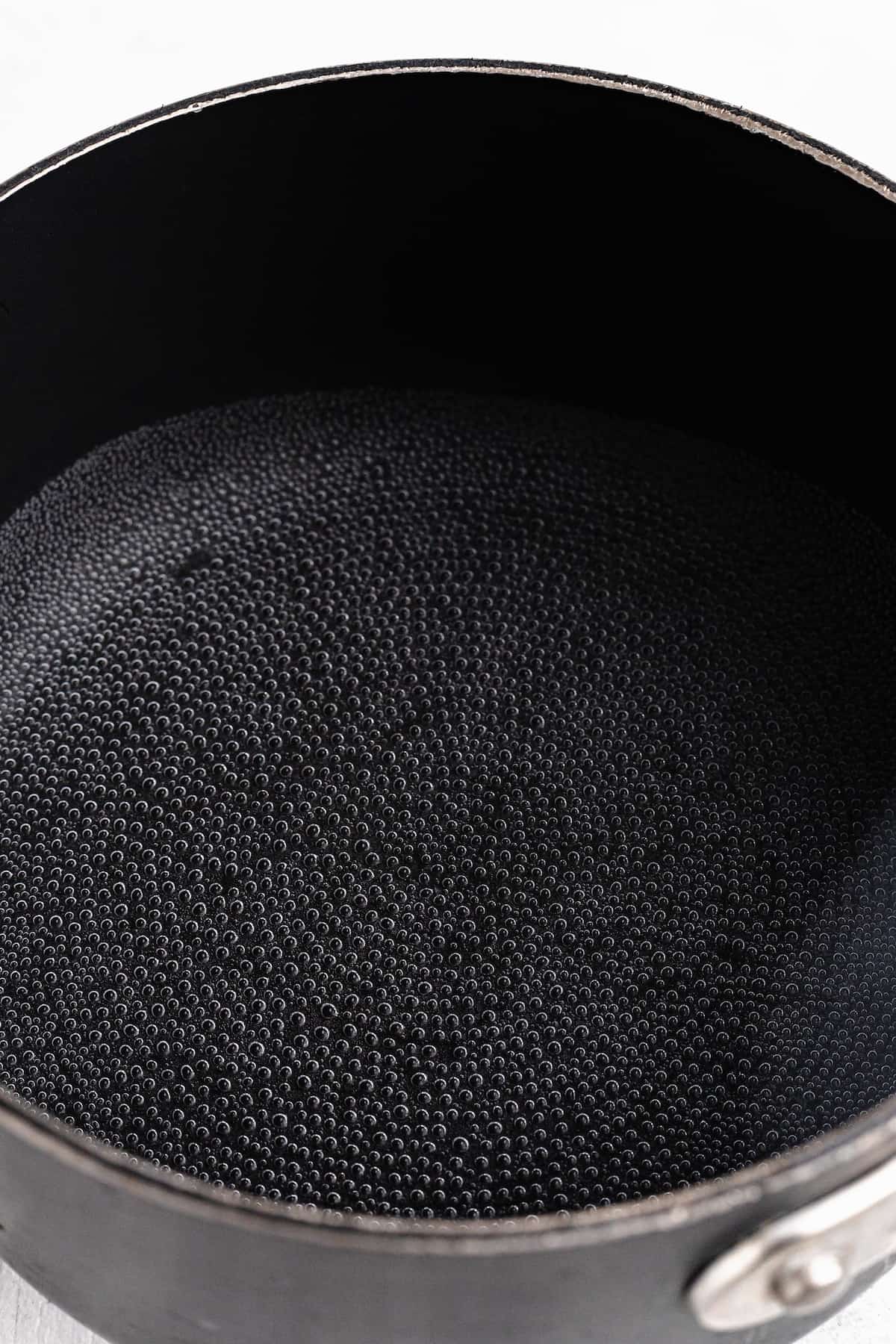
- Heat the water in a saucepan. Fill a large, ideally shallow saucepan 1/4 of the way full with water. Bring it to an almost boil, i.e., there should be lots of small little bubbles on the bottom of the pan. Add 1 teaspoon of vinegar to the water.
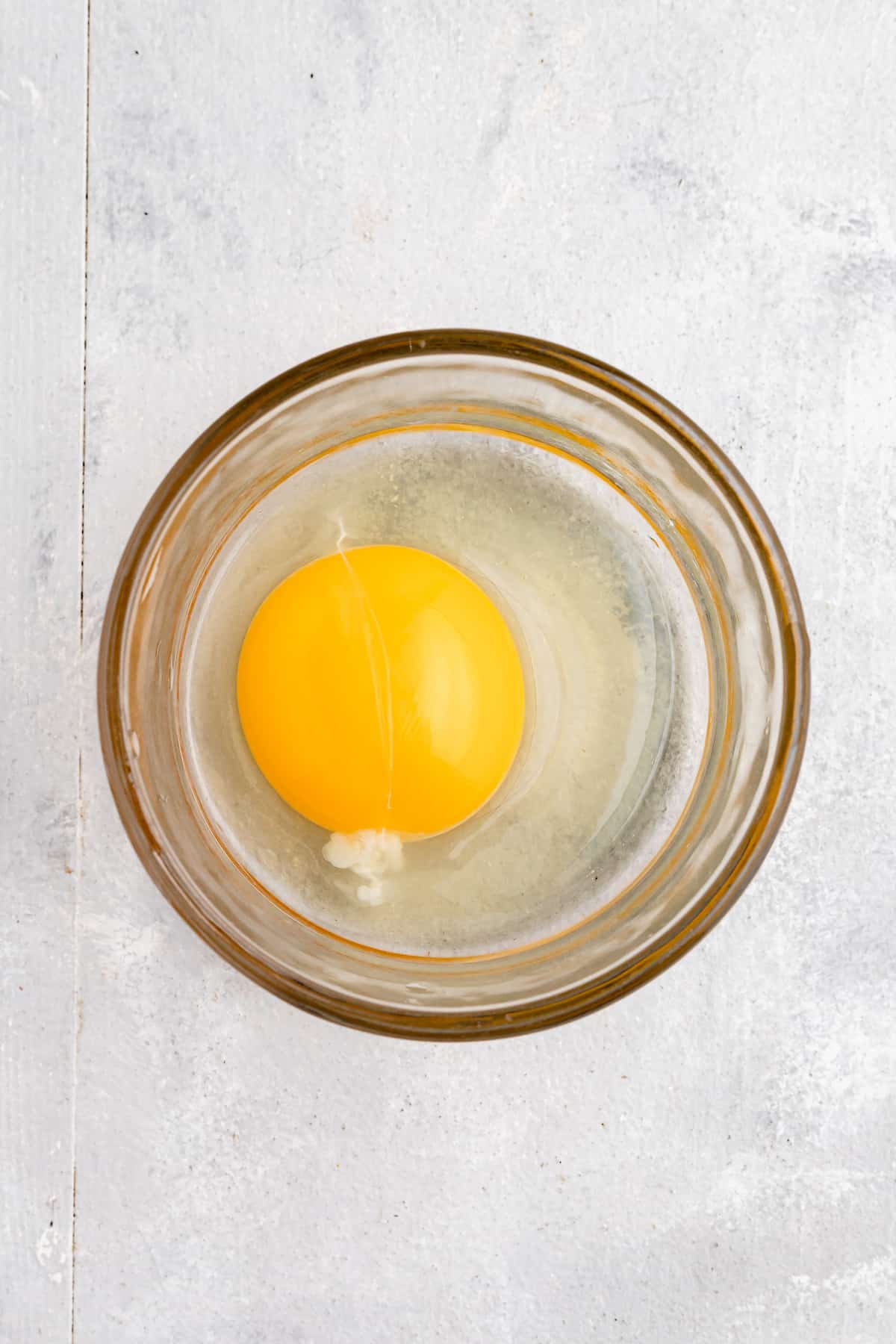
- Crack the first egg. Meanwhile, crack one egg into a small heat-proof dish.
- Add the egg carefully to the pan. Next, bring the small dish very close to the almost boiling water. Gently slide the egg into the water.
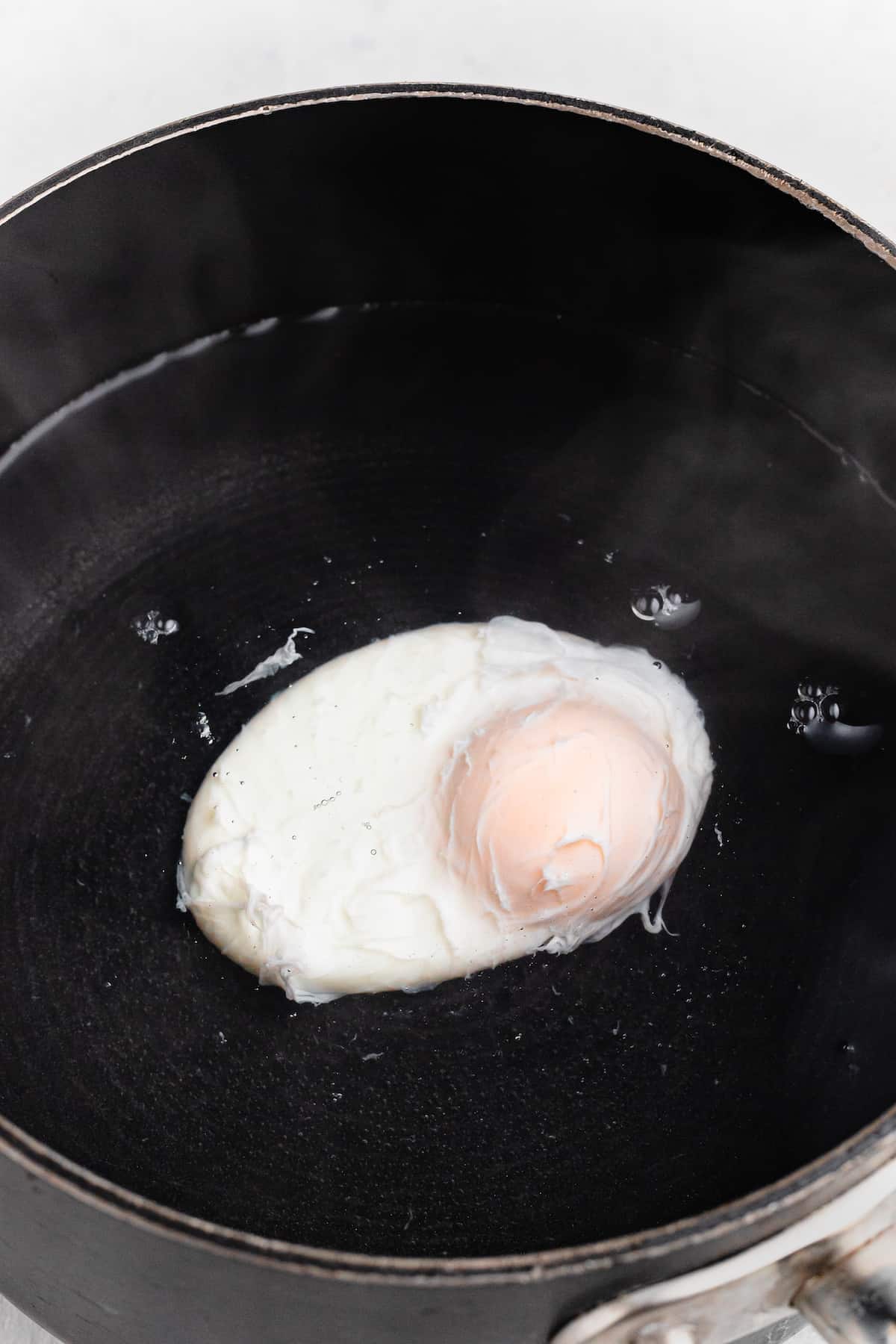
- Gently shape the whites. Use a spoon to very gently move the whites closer to the yolk.
- Cover and let it sit. Now, switch off the heat. Cover the pan and let the egg poach for 4 minutes. For a medium-poached egg, let it sit for up to 1 minute longer.
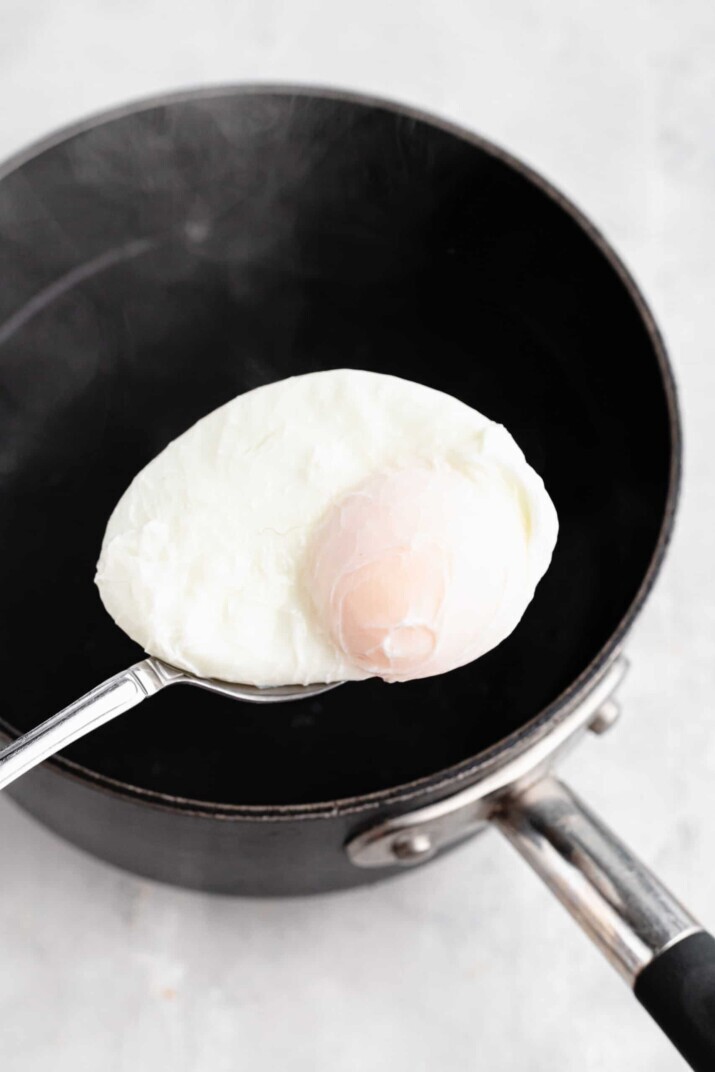
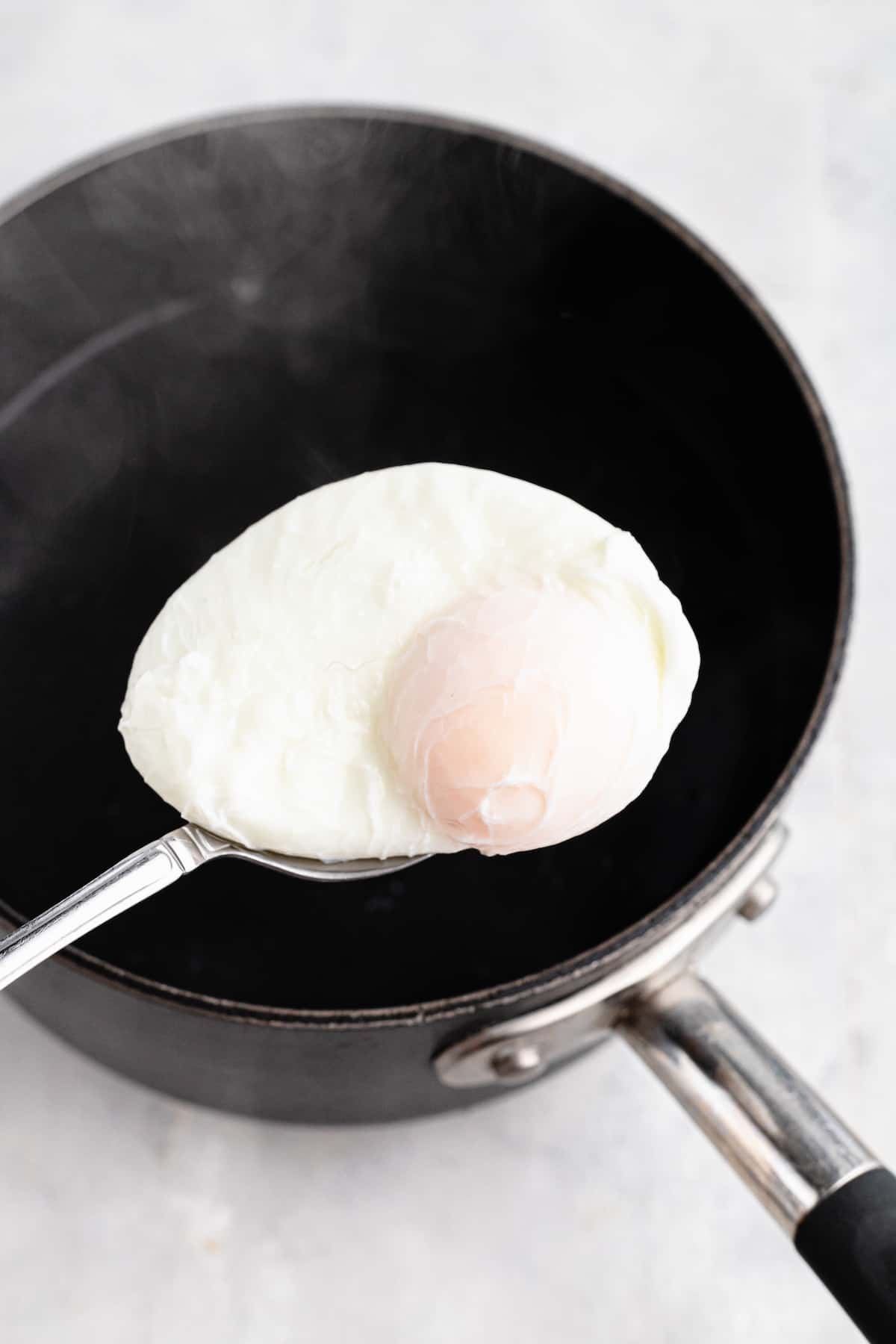
- Remove and serve. Remove the cover. The egg whites should be white and solid. Carefully remove the poached egg from the pan with a slotted spoon and serve.
Tips for Perfect Poached Eggs
I found the following tips and tricks helpful when making poached eggs. You’ll be a pro in no time!
- Be very gentle. Be as gentle as possible when handling the egg throughout the poaching process. It doesn’t take long at all, so there’s no need to rush!
- Don’t let the water boil. One of the common mistakes when making poached eggs is letting the water come to a full boil. Boiling water is too hot to poach eggs properly, and large, rolling bubbles can interfere with the whites. The water for poaching eggs should be heated just up until the simmering point, indicated by a layer of small bubbles at the bottom of the pan.
- Don’t skip the vinegar. A teaspoon of vinegar helps the egg whites stick together. As long as you use plain white vinegar, you won’t be able to taste it at all in the finished eggs.
- Crack the egg into a bowl first. Any small, heat-proof dish does the trick. It makes it easy to gently slide the egg into the hot water without splashing or splitting.
- Use a slotted spoon. When removing the poached egg from the pan, use a slotted spoon so the water drains.
Ways to Serve Poached Eggs
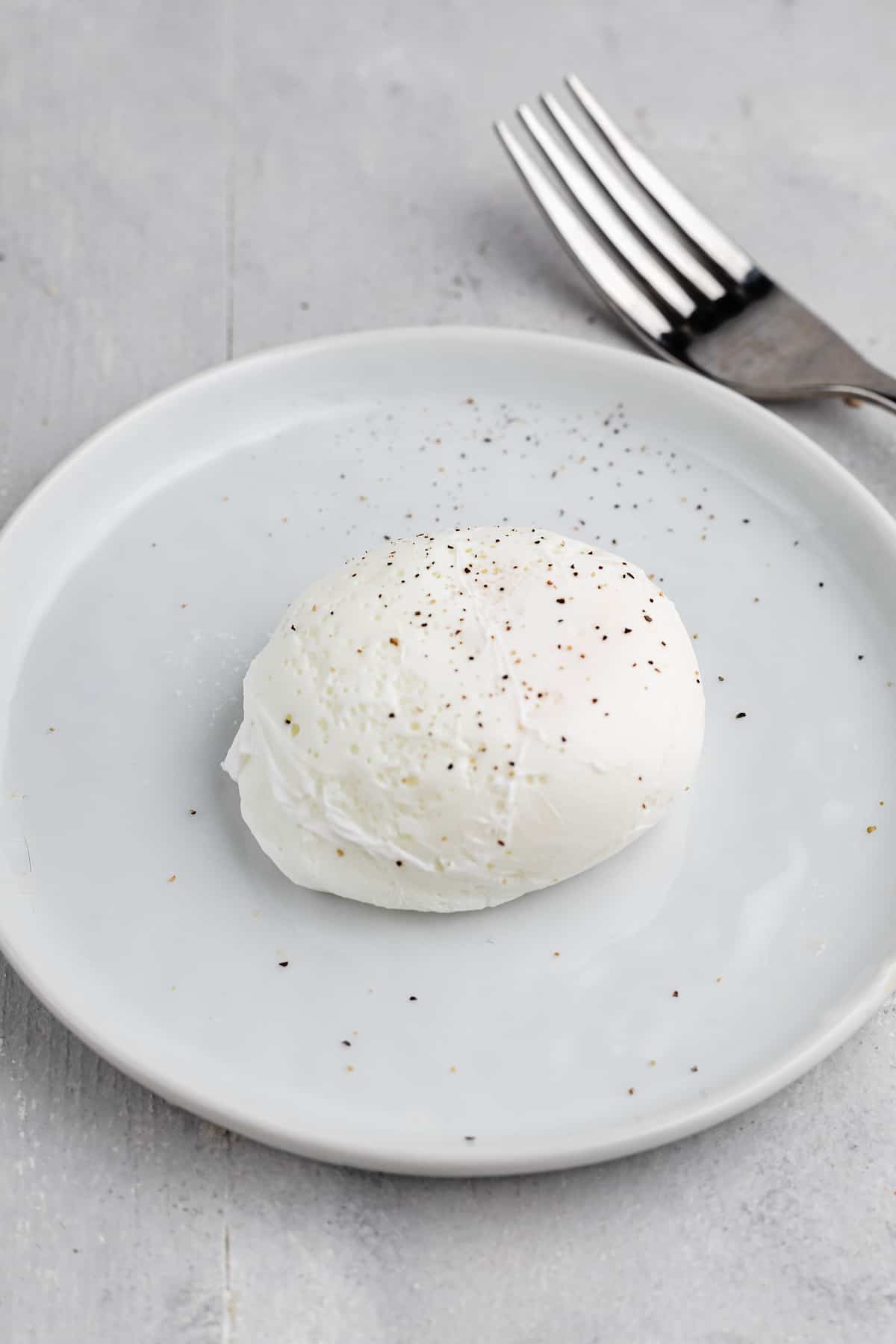
A poached egg is like the cherry on top! It makes a fabulous addition to an open-faced sandwich, salads, and so much more. These are some of my favorite serving ideas I’ve tried:
- Eggs Benedict: The favorite choice. Top a toasted English muffin with bacon, a perfectly poached egg, and Hollandaise sauce in that order for classic Eggs Benny. Swap bacon with wilted spinach for Eggs Florentine, or try cured or smoked salmon for Eggs Halifax!
- As a toast topper: Add a poached egg to any of these avocado toast recipes for a quick protein boost.
- Breakfast skillet: Serve your eggs on top of a spinach and mushroom breakfast skillet. I also love poached eggs on my smoky bacon sweet potato hash.
- Huevos rancheros: Try my huevos rancheros tostadas topped with poached eggs for a fun twist on the classic Tex-Mex breakfast dish.
- Salads and bowls: An egg adds the ultimate finishing touch to a Southwestern quinoa salad or harvest grain bowl.
How Long Do Poached Eggs Last in the Fridge?
- Poached eggs will last 2-3 days in the fridge. They’re actually one of those unsung breakfast heroes that are great to prep in advance! To store leftovers, place the eggs in an airtight container and cover them with cold water to keep them fresh.
- To reheat poached eggs, soak them in hot water (140-150°F) for a minute or two so they warm through. Don’t boil them again or the eggs will overcook.
More Easy Egg Recipes
I could never get tired of eating eggs! The recipes below are more of my favorites.
Perfect Poached Eggs
- Prep Time: 1 minute
- Cook Time: 4 minutes
- Total Time: 5 minutes
- Yield: 1 1x
- Category: Breakfast
- Method: Stove
- Cuisine: American
Description
Learn how to make perfect poached eggs on the stovetop with this easy tutorial! I’m talking runny, gooey yolks that ooze out when you pop into the soft white exteriors.
Ingredients
- 1 large egg
- 1–3 cups of water (you’ll be filling your saucepan 1/4 of the way full, the amount may vary based on the size of your pan)
- 1 teaspoon plain vinegar
Instructions
- Fill a large shallow saucepan 1/4 of the way full with water. Bring to an almost boil, add 1 teaspoon of vinegar to the water.
- With a spoon, swirl the water two or three times so it looks like a whirlpool.
- Next, crack one egg into a small dish. Bring the small dish very close to the almost boiling water and gently slide the egg into the swirling water. The swirl will help the egg whites stick together.
- Immediately turn the heat off and cover for 4 minutes.
- Gently remove poached egg from the pan with a slotted spoon and serve.





31 comments on “How to Poach an Egg”
I tried this with a non-stick pan, and the edges of the egg became feathery and separated. I’ll try again another time with a different pan. I’m wondering if it would help to put the raw egg in a ladle, and dip that in the water to set the edges before dropping the full egg into the water. But balancing the ladle and cracking the egg into it might need 2 people (3 hands to hold everything). And turning off the water before boiling – it wasn’t fully cooked in 4 minutes so I had to put the heat back on, up to barely boiling again.
Tried for the first time and worked out perfect
Took off the lid and there was just an uncooked egg in dirty vinegary water very disappointed 🙁
Hm.. I’m so sorry to hear that. Poached eggs can be a little tricky at times. Try bringing it to a full boil next time.
My mom had a sauce pan about 8 inches around had a tray that you placed in it the tray had 4 triangular slots with lift out cups.You would put the water in place the tray and then the triangular cups in add a egg to each cup put on the lid and cook for a few minutes Kuala poached eggs lift out cup turn out egg. Don’t know if they make them still but I’m sure they do.
I’d never poached an egg before (or eaten one) so this was a great tutorial for me. I made poached eggs for breakfast yesterday and they turned out spot on due to your recipe. I didn’t even have to waste an egg – thanks! So glad I pinned this earlier.
WHAT!? Awesome… you must be a poaching natural. So glad to hear that you didn’t waste eggs like me.. haha. 🙂 Hope they were delicious with whatever you ate them with.
This is a great post for me because I always struggle with poaching eggs (even when I add vinegar or milk) – I’m definitely going to give it another go!
Well, your not alone. It took me a dozen eggs before I finally felt confident of my “poaching abilities”. 🙂 So keep trying.
I love poached eggs…in fact, I love eggs any way shape and form! I love your tip about the putting the lid on… have never tried that one. I’ll have to do it next time. We make eggs benedict all the time. In fact, I’m going to have my hollandaise sauce on this week. We are on the same brain wave! Here’s a tip that I have learned to do with the eggs…after you put some vinegar in the pot of water, stir the water in a big circle. (Like it’s going down the drain.) And add your egg(s) to it. It will keep the whites around the yolks. The whole thing is like a science experience, don’t you think?! Pinning!
So fun! So the eggs literally are going in a whirlpool. Nice, totally makes sense, and yes I felt like I was doing a science experiment. Especially after going through 12 eggs!!! Can’t wait to see your Hollandaise sauce, maybe I could put it over some asparagus or something. 🙂
Also fresher the eggs, the tighter the whites. If eggs seems watery, use strainer to remove some of the loose whites. Then vinager, boil water and swirl gently place egg in water.
Awesome! Thank you so much Terry!
Thanks for the tutorial – I’m pinning for later. I too have never made (or eaten!) a poached egg before…I guess it’s about time.
No problem, I figured if I have never done it before I’m sure other people haven’t either. Might as well share the knowledge. 🙂
poaching an egg seems simple but it requires some real skill to make it just perfect….ur recipe is darn good…will make any novice poach eggs with confidence 🙂
Thanks Kumar! It definitely requires some skill and patience. Your comments were so sweet and encouraging, thank you so much!
Ooh..Maui…I’ve never been but I’m hoping this will change very soon. I absolutely love poached eggs! What I don’t like about eggs benedict is the hollandaise sauce..I know..I’m odd…so I always order mine without. I still haven’t mastered the art of poaching eggs…I’m going to keep trying though 😉
hahah… Min that is so funny! I wasn’t fond of the hollandaise either. The egg yolk adds enough sauce for the dish… why add more. 🙂 Keep at perfecting your poaching add craft… you’ll get it eventually.
Confession: I’ve never poached an egg :(. But thanks for these tips!! Now I feel equipped to attempt it!!
🙂 No problem… I hope they turn out Zainab!
Man, where was this tutorial when I could eat eggs, LOL!!! I always wanted to know how to do this!
haha.. major bummer. Why can’t you eat eggs anymore? That’s so sad. 🙁
great tips! it seems simple but poached eggs can be difficult.
For real! I was getting so frustrated… but then finally got it! Success! 🙂
Wow!! Your eggs are beautiful! I have actually never done it this way but I’m gonna try it! I just bring the water to a boil, reduce it to a simmer, drop in the egg, and then use a fork to capture any runaway stringies. No fanciness with my very utilitarian poached eggs but your step by step photos are crazy gorgeous and i feel like the vinegar is probably a key component that I’m missing… Thanks Krista!
Thanks Heather, your so sweet! Love me some poached eggs. 🙂 Let me know how they turn out!
Thank you for this, Kristin! We’ve been enjoying poached eggs at a cafe and my son is asking me to make them. I was going to find something online, and voila! here is your post. Perfect timing!
🙂 Perfect timing is right. So funny how things like that happen. Hope you and your son enjoy! Thanks for stopping by Marcie.
Awesome- my son actually does this as a science experiment. Every time I only need whites or yolks- he takes the remaining parts & boils them to “see what will happen”. He’s fascinated by it.
haha… gotta love boys! I can’t wait until Cason starts to get into that kind of stuff. 🙂